Historical Background
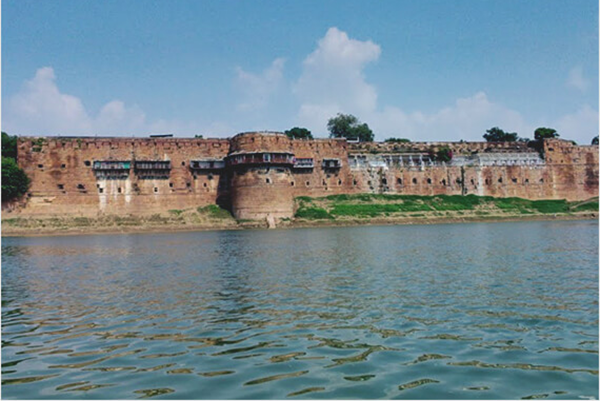
Allahabad Fort, located on the banks of the Yamuna River near the Triveni Sangam (the confluence of the Ganga, Yamuna, and the mythical Saraswati rivers), is a monumental symbol of Prayagraj’s historical legacy. It was constructed in 1583 by the Mughal emperor Akbar to secure this strategically significant and spiritually revered location.
Architectural Significance
The fort is one of the grandest examples of Mughal military architecture, featuring massive stone walls, high battlements, and three grand gateways. It was once among the most advanced forts in northern India. While much of the structure is currently under the control of the Indian Army and not open to the public, select areas are accessible during major religious events such as the Kumbh Mela.
Major Attractions Inside
Within the fort, the most notable structure is the Ashoka Pillar, which dates back to the 3rd century BCE. This sandstone pillar contains inscriptions from Emperor Ashoka, later Gupta kings, and even Mughal emperor Akbar, offering a unique timeline of Indian history.
Another significant site within the fort is the Patalpuri Temple, an underground Hindu shrine. Inside the temple is the sacred Akshaya Vat (eternal banyan tree), which is deeply revered in Hindu mythology and believed to be indestructible.
Cultural and Religious Importance
Allahabad Fort is more than just a military stronghold; it is a place of great religious and cultural value. Its proximity to the Sangam and presence of ancient religious symbols make it an important pilgrimage site.
Review
Although large portions of the fort are restricted, Allahabad Fort remains a powerful symbol of Prayagraj’s architectural grandeur, historical richness, and spiritual depth—attracting historians, tourists, and pilgrims alike.