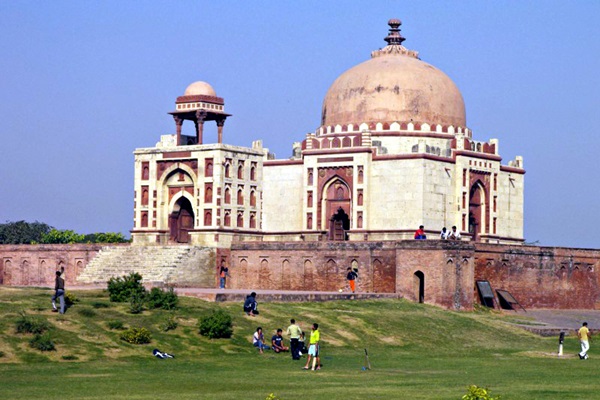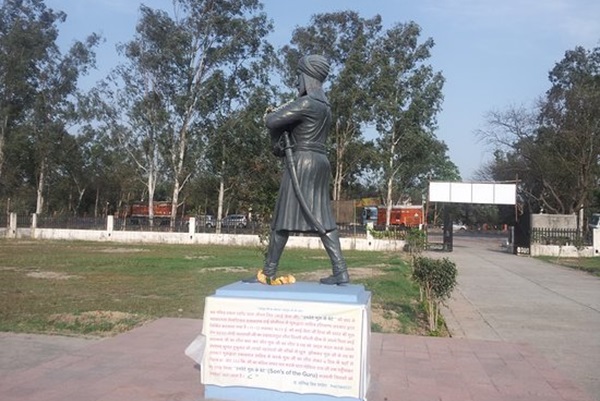
Badh Khalsa Memorial
Guru Tegh Bahadur, the ninth Sikh Guru, became a martyr in 1675 for his unwavering stance on religious freedom and justice. His martyrdom is one of the most significant events in Sikh history. During the reign of the Mughal Emperor Aurangzeb, there were aggressive efforts to enforce Islamic conversion policies, particularly targeting non-Muslims, including Hindus.
Defending Religious Freedom
When Emperor Aurangzeb attempted to forcibly convert the Kashmiri Pandits (a Hindu group from Kashmir), they sought Guru Tegh Bahadur’s intervention. The Pandits requested the Guru to help them protect their right to practice their religion freely, without fear of forced conversion. Guru Tegh Bahadur, a staunch defender of religious tolerance, agreed to take a stand.
The Guru’s Sacrifice
Guru Tegh Bahadur refused to accept the emperor’s policies and offered to sacrifice his own life in defense of the religious rights of others. In response, Aurangzeb ordered Guru Tegh Bahadur’s arrest. After enduring imprisonment and severe torture, the Guru remained steadfast in his beliefs.
Execution and Martyrdom
In 1675, Guru Tegh Bahadur was executed by beheading in Delhi for his refusal to convert to Islam and for his defense of religious freedom. His martyrdom is considered an act of supreme sacrifice for the cause of human rights and the freedom to practice one’s faith.
Legacy
Guru Tegh Bahadur’s martyrdom remains a powerful symbol of bravery, commitment to justice, and the willingness to lay down one’s life for the cause of others’ freedom. He is revered not only by Sikhs but by people of all faiths who value religious freedom and tolerance.
Bhai Jaita Ji
After the martyrdom of Guru Teg Bahadur, Bhai Jaita Ji bravely picked up the severed head and began his journey towards Anandpur Sahib. Due to strict surveillance ordered by Aurangzeb, Bhai Jaita Ji had to make several stops along the way. At one point, he stopped at a place now known as Budh Khalsa that is today called Badh Khalsa Memorial. Despite the risks, Bhai Jaita Ji either hired horses or concealed the Guru’s severed head in a pitcher, continuing his journey until he reached Anandpur Sahib, where he became a revered and immortal figure in Sikh history.
Bhai Lakhi Shah Vanjara
After the martyrdom of Guru Teg Bahadur, when his head was severed, the Mughal authorities imposed strict vigilance to prevent Sikhs from seeing the Guru’s body. Bhai Lakhi Shah Vanjara, a devoted Sikh, took a great risk to honor his Guru. During a dust storm, he hid the Guru’s body in his bullock cart and transported it to his home. To ensure the Guru’s cremation, he set his own house on fire, using the flames to perform the last rites.
Review
In our estimation, the Badh Khalsa Memorial is a landmark that reminds us of Guru Tegh Bahadur’s sacrifice for justice, as well as Bhai Jaita Ji’s courage and respect towards the Guru. Visiting the memorial will refresh your memories of the past.