On 11 November 1675, Mughal Emperor Aurangzeb ordered the execution of Guru Tegh Bahadur, the ninth Sikh Guru, in Delhi. The Guru sacrificed his life to defend Hindus and Sikhs from being forced to convert to Islam. This act of martyrdom became a pivotal moment in Sikh history, symbolizing the fight for religious freedom and human rights.
Lakhi Shah Vanjara Cremates Guru Tegh Bahadur’s Body
After Aurangzeb’s men executed Guru Tegh Bahadur, Lakhi Shah Vanjara acted swiftly to protect the Guru’s body.
- Lakhi Shah transported the body under the cover of night to his home.
- To cremate the Guru, Lakhi Shah burned his own house, ensuring the Mughal authorities could not desecrate the body.
- Sikhs later commemorated his sacrifice by establishing Gurdwara Rakab Ganj Sahib at the cremation site.
Bhai Jaita Transports Guru Tegh Bahadur’s Severed Head
Bhai Jaita carried Guru Tegh Bahadur’s severed head (Sis) to Anandpur Sahib.
- Despite hostile conditions, Bhai Jaita ensured the head reached Guru Tegh Bahadur’s son, Guru Gobind Singh, safely.
- On the way, Bhai Jaita stopped overnight in Ambala and temporarily placed the head there.
- Sikhs later built Gurudwara Sis Ganj Sahib in Ambala to honor Bhai Jaita’s brave act.
Gurudwara Sis Ganj Sahib in Ambala
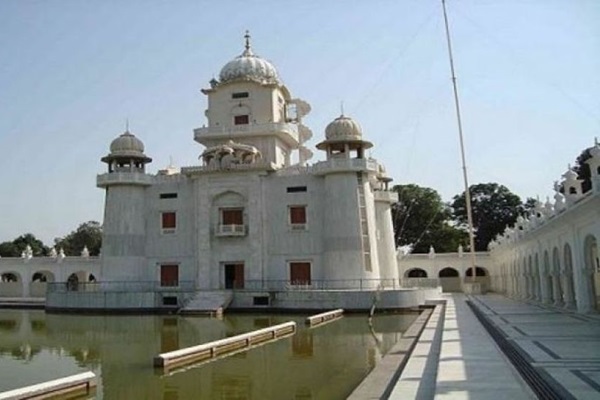
To commemorate Bhai Jaita’s overnight stop in Ambala, Sikhs established Shri Sis Ganj Gurdwara near the local vegetable market. This sacred site reminds visitors of Guru Tegh Bahadur’s sacrifice and Bhai Jaita’s devotion.
Guru Gobind Singh’s Role and Legacy
Guru Tegh Bahadur’s son, Guru Gobind Singh, continued his father’s mission to defend the oppressed and promote religious freedom.
- Guru Gobind Singh founded the Khalsa in 1699, creating a brotherhood of Sikhs dedicated to fighting tyranny and injustice.
- His leadership and teachings inspired Sikhs to resist oppression and uphold their faith.
Gurdwara Rakab Ganj Sahib: A Sacred Site
Sikhs established Gurdwara Rakab Ganj Sahib near the Indian Parliament in Delhi at the site where Lakhi Shah Vanjara cremated Guru Tegh Bahadur’s body.
- This gurdwara symbolizes Sikh resilience and sacrifice.
- It stands as a reminder of Guru Tegh Bahadur’s commitment to protecting the right to worship freely.
Guru Tegh Bahadur’s Impact on Sikh History
Guru Tegh Bahadur’s execution transformed Sikh history and reinforced the community’s dedication to religious freedom. His actions demonstrated:
- The importance of standing against oppression and defending others’ rights.
- The courage of Sikh leaders, who prioritized justice over personal safety.
- The unity of the Sikh community, which stood firm under the leadership of their Gurus.
Modern Observances
- Sikhs honor Guru Tegh Bahadur’s sacrifice annually during Martyrdom Day, reflecting on his courage and teachings.
- Devotees gather at Gurdwara Rakab Ganj Sahib, Shri Sis Ganj Gurdwara in Delhi, and other historical sites to offer prayers and sing hymns.
Conclusion
Guru Tegh Bahadur’s martyrdom and the devotion of disciples like Lakhi Shah Vanjara and Bhai Jaita highlight the Sikh community’s courage and faith. Gurdwara Rakab Ganj Sahib and Shri Sis Ganj Gurdwara in Ambala preserve the legacy of these events, inspiring Sikhs to uphold the values of justice, freedom, and devotion.

