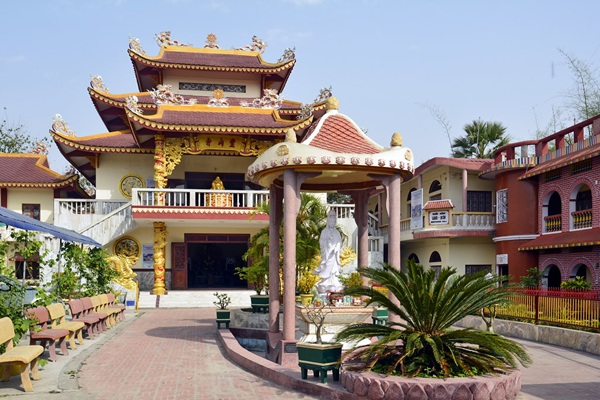
Matha Kunwar in Kushinagar stands as a powerful reminder of ancient devotion and artistic heritage. With its historical significance, spiritual atmosphere, and archaeological richness, the site continues to contribute to the legacy of Buddhism and attract those seeking deeper understanding and peace.

Matha Kunwar in Kushinagar is a significant archaeological and religious site that offers deep insight into the rich Buddhist heritage of India. Located near the famous Mahaparinirvana Stupa, this ancient site is believed to house a valuable relic of Lord Buddha. With its historical depth and spiritual importance, Matha Kunwar attracts both pilgrims and history enthusiasts from around the world.
Historical Background
The Matha Kunwar site dates back to the Kushan period (1st–3rd century CE), a time when Buddhism flourished under royal patronage. According to archaeologists, this site originally served as a shrine built to preserve one of the eight original relics of Lord Buddha distributed after his Mahaparinirvana. Excavations have revealed the remnants of a large stupa and a broken statue of Buddha, believed to be one of the earliest representations of the Enlightened One.
Architectural Features
The remains at Matha Kunwar include a brick stupa base and fragments of ancient sculptures. Among these, the most remarkable is a colossal statue of Lord Buddha seated in the bhumisparsha mudra (earth-touching posture), symbolizing the moment of enlightenment. Although the statue is damaged, its craftsmanship still reflects the artistic excellence of the early Buddhist period. The site layout and construction suggest a well-organized complex that once served as an active center for worship and learning.
Archaeological Importance
Archaeological Survey of India (ASI) has conducted multiple excavations at Matha Kunwar, uncovering relics, coins, and terracotta items that date back nearly two millennia. These findings have helped historians piece together the spread and development of Buddhism in the Gangetic plains. The site continues to be of great interest to researchers studying ancient Indian art, culture, and religious practices.
Spiritual and Cultural Significance
Though less crowded than other monuments in Kushinagar, Matha Kunwar holds deep spiritual value for Buddhist pilgrims. Devotees visit the site to offer prayers, meditate, and connect with the life and teachings of the Buddha. Local communities also regard the site with reverence and help maintain its sanctity. Spiritual tourists often include Matha Kunwar in their pilgrimage circuit to complete their journey through Lord Buddha’s final days.