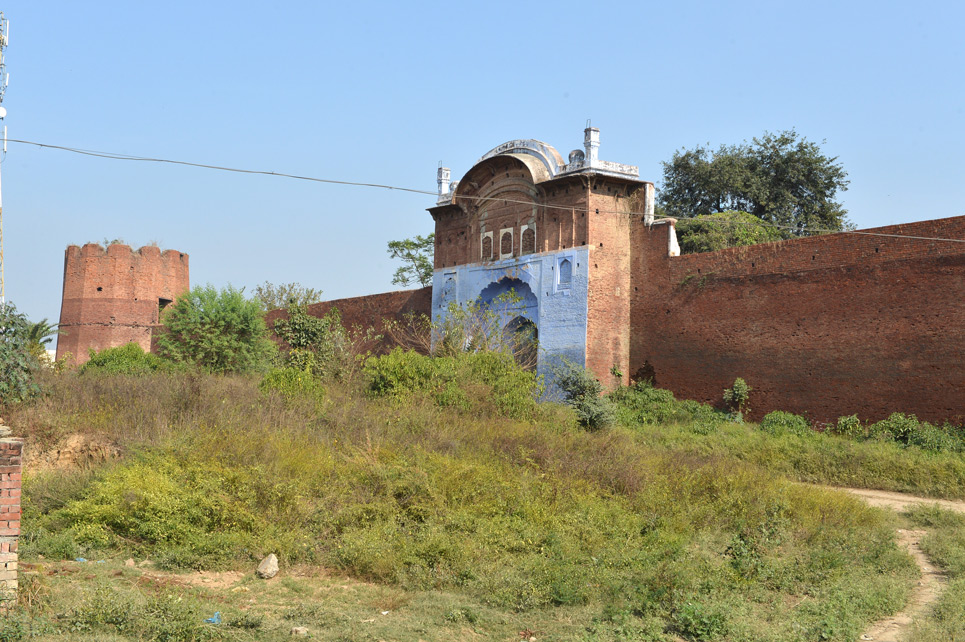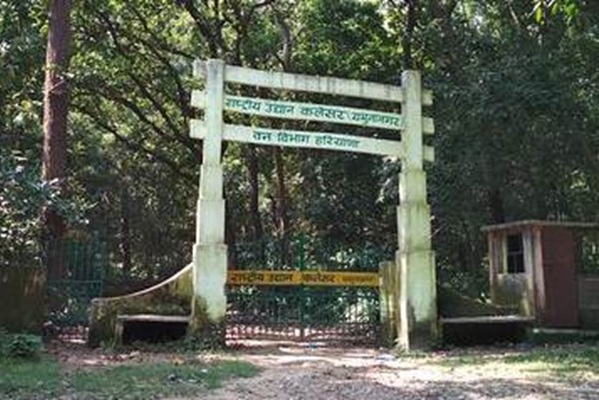
Kalesar National Park
Kalesar National Park is located at the foothills of the Shivalik range in the mighty Himalayas. Geographically, it lies between 30°18′ to 30°27′ North latitude and 77°18′ to 77°35′ East longitude. Situated in the Yamunanagar district of Haryana, it shares borders with three states: Himachal Pradesh, Uttarakhand, and Uttar Pradesh. The Yamuna River forms the eastern boundary with Uttar Pradesh, while the main Shiwalik ridge marks the separation between Haryana, Himachal Pradesh, and Uttarakhand in the north.
The park is named after the Kalesar (Shiva) temple situated within its protected area. It is rich in biodiversity, featuring dense Sal and Khair forests, as well as patches of grasslands that support a wide variety of plant and animal species.
Kalesar was officially designated as a national park on December 8, 2003, covering 11,570 acres. Adjacent to it is the Kalesar Wildlife Sanctuary, notified on December 13, 1996, spanning 13,209 acres. The park is significant for its biodiversity and ecological role in the region. It is a repository of medicinal plants and is home to several threatened species such as the Leopard, Ghoral, Barking deer, Sambar, Chital, Python, King Cobra, and Monitor lizard. Occasionally, Tigers and Elephants migrate from Rajaji National Park in Uttarakhand, and with improved habitat management, they may potentially stay year-round. Thus, the park plays a vital role in the conservation of these highly endangered species.
Geography and Terrain
The Shiwalik Hills, formed by sedimentary rocks like sandstone, clay, and conglomerates, are highly fragile and prone to erosion, especially during heavy rains. The park helps mitigate flash floods by stabilizing the ecosystem. It is the only national park in Haryana with natural forests supporting such a diverse range of wildlife, making it of great importance for conservation, education, tourism, and research.
Boundaries
The national park and sanctuary are clearly marked with pillars and natural boundaries like rivers and streams. To the north, the Simbalwada Wildlife Sanctuary in Himachal Pradesh borders the park, separated by a ridge and marked by pillars. The eastern boundary is formed by the Yamuna River, which separates the park from Uttar Pradesh. The southern boundary is defined by agricultural lands of various villages such as Tajewala, Araynwala, and Khizri. To the west, the park is bordered by crop fields of Faqirmajra and Ibrahimpur villages.
Wildlife
Kalesar National Park is home to a variety of wild animals, benefiting from its diverse habitats. Although populations are currently low, the full protection of the park is expected to allow wildlife numbers to grow to the area’s full carrying capacity in the coming years. Among the herbivores, Sambhar is commonly seen in the dense forested areas, while Chital is found in the open grassy patches. The Barking deer thrives in forested areas with ample ground cover, and the Goral inhabits the rocky slopes of the Shiwalik ridges. The park also has populations of Rojh (Blue Bull) and wild boar.
Elephants, which occasionally migrate from Rajaji National Park, stay for short periods, but with better water management, they may stay longer. Rhesus macaques are common but have become a nuisance, attacking villages and raiding crops. Leopards are the primary carnivores in the park, with about 20-22 individuals. Tigers are occasional visitors from Rajaji National Park but may settle if prey availability improves.
Safari Arrangements
Visitors can explore the park on safari trips conducted in jeeps, with prior permission from the Wildlife Inspector stationed at Kalesar National Park. The Wildlife Wing of the Forest Department has authorized local residents to offer safari services, and the fees are paid directly to the jeep owners.
Safari Routes
Three designated motorable safari routes are available for visitors:
– Route I: 7 km, 20 feet wide
– Route II: 6.5 km, 60 feet wide
– Route III: 6 km, 60 feet wide
Only registered private jeeps with permission from the Wildlife Inspector are allowed to enter the park.
Visiting Hours
The park is open to visitors during the following times:
– Summer Months:
– Morning: 6:00 AM to 10:00 AM
– Evening: 4:00 PM to 7:00 PM
– Winter Months:
– Morning: 7:00 AM to 11:00 AM
– Evening: 3:30 PM to 6:00 PM